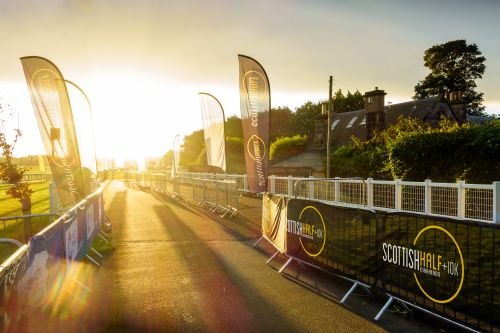
The Scottish Half Marathon has earned a reputation as one of the fastest and most prestigious half marathon races in Scotland. Known for its flat coastal route and consistently strong performances, the event attracts elite athletes, club runners, and recreational participants from across the UK. Its history is closely tied to Scotland’s growing presence on the international road running scene.
What Is the Scottish Half Marathon?
The Scottish Half Marathon is an annual road race typically held in late summer. The course runs along the East Lothian coastline, often incorporating sections similar to those used in the Edinburgh Marathon Festival. With minimal elevation gain and open roads, it is widely regarded as one of the quickest half marathon courses in the country.
The race appeals to runners seeking personal bests, qualifying times, or a high-quality standalone half marathon experience.
The Origins of the Scottish Half Marathon
The Scottish Half Marathon was created to provide Scotland with a premier half marathon event that could match the quality and speed of leading UK races. While Scotland had a strong tradition of road running, there was demand for a half marathon that combined elite-level organisation with mass participation.
From the beginning, the event was designed with performance in mind. Course accuracy, road surface quality, and race logistics were prioritised to ensure credibility and fairness.
Course Design and Performance Focus
The defining feature of the Scottish Half Marathon is its flat and fast course. Running along coastal roads near sea level, the route allows runners to maintain a steady pace with minimal disruption. Long straight sections and gentle gradients contribute to the race’s reputation for fast finishing times.
Weather conditions in late summer often provide favourable racing conditions, further enhancing the likelihood of personal bests.
Elite Racing and Record-Breaking Performances
Throughout its history, the Scottish Half Marathon has attracted elite athletes due to its speed and reliability. The race has seen numerous record-breaking performances, including national and age-group records.
Elite participation has helped raise the profile of the event, while also creating an inspiring atmosphere for mass participants. Many runners are motivated by the opportunity to compete on the same course as elite athletes.
Growth in Mass Participation
While elite racing is a key feature, the Scottish Half Marathon has also grown significantly as a mass-participation event. Thousands of runners take part annually, including first-time half marathoners and experienced club runners.
The event’s supportive atmosphere, clear course layout, and professional organisation make it particularly appealing to those new to the distance.
Community and Economic Impact
The Scottish Half Marathon delivers important economic benefits to East Lothian and surrounding areas. Visiting runners contribute to local hospitality, transport, and tourism sectors.
Community involvement is central to the event’s success, with volunteers and local residents playing a vital role in race-day operations and runner support.
The Scottish Half Marathon Today
Today, the Scottish Half Marathon is regarded as one of the premier half marathon races in Scotland and a key target event for runners seeking fast times. Its history reflects Scotland’s growing influence in endurance running and its ability to host high-quality road races.
The event continues to attract runners from across the UK and beyond, reinforcing its status as a cornerstone of the Scottish running calendar.