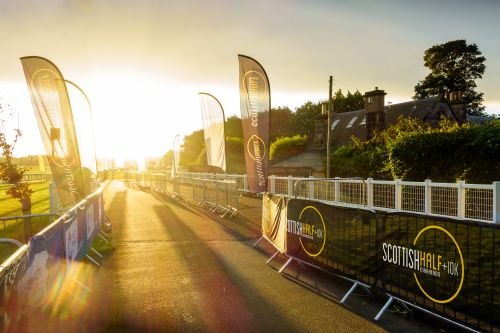
The Scottish Half Marathon is widely regarded as one of the fastest and most runner-friendly half marathons in the UK. Known for its point-to-point route, net downhill profile, and excellent organisation, the race attracts thousands of runners each year, from first-time half marathoners to experienced athletes chasing personal bests.
Held annually in late summer, the Scottish Half Marathon offers a distinctive racing experience that combines urban landmarks, open countryside, and coastal scenery. While the course profile is favourable, success at this event depends on discipline, smart pacing, and an understanding of how environmental factors such as wind can influence performance.
This in-depth guide explores everything you need to know about the Scottish Half Marathon, including a detailed course breakdown, expected weather conditions, training requirements, and race-day strategy.
Overview of the Scottish Half Marathon
The Scottish Half Marathon typically takes place in August and forms part of a weekend of racing that also includes a 10K event. Its late-summer timing makes it particularly appealing to runners who have built fitness through spring and early summer or who are targeting a fast end-of-season performance.
The race is professionally organised, with efficient logistics, well-stocked aid stations, and clear communication. Its reputation as a “PB course” has grown steadily, making it a popular choice for runners seeking a fast, well-supported half marathon without the congestion of larger city races.
The Scottish Half Marathon Course in Detail
The Scottish Half Marathon is a point-to-point race that usually starts near Edinburgh and finishes in Musselburgh. The defining feature of the course is its net downhill profile, which gradually descends over the 13.1-mile distance rather than dropping sharply.
The opening miles take runners out of the city and onto wide, open roads. These early sections often feel effortless due to the gentle downhill gradient, making it tempting to run faster than planned. This is where discipline is crucial. Going out too hard can lead to fatigue later in the race, particularly when the course becomes more exposed.
As the race progresses, runners move through quieter stretches of road and countryside. These middle miles are typically flat and fast, offering an excellent opportunity to settle into goal pace. With fewer spectators and less visual distraction, maintaining focus becomes important.
The final third of the course brings runners closer to the coast. While elevation remains manageable, this is where environmental factors begin to play a greater role. Depending on the conditions, runners may encounter headwinds or crosswinds that increase perceived effort.
The closing miles require mental resilience. Although the profile remains favourable, fatigue combined with exposure can make this section challenging. Crowd support increases as runners approach the finish in Musselburgh, providing a welcome boost of energy and encouragement.
Overall, the course rewards patience, even pacing, and strong aerobic conditioning rather than aggressive early running.
Weather Conditions and Coastal Exposure
Weather plays a significant role in the Scottish Half Marathon. August temperatures are usually warmer than spring races, often ranging from 14 to 20 degrees Celsius. While these conditions are manageable, they require careful hydration and pacing, particularly for runners aiming for fast times.
Wind is the most important environmental factor. The exposed nature of parts of the course, especially near the coast, means headwinds can dramatically affect effort levels. Even moderate wind can feel demanding over longer stretches.
Rain is always possible in Scotland, but heavy downpours are relatively uncommon at this time of year. Light rain can actually help keep runners cool, though it may increase wind chill if combined with breezy conditions.
Sun exposure should also be considered. Open sections of road offer little shade, making sunscreen and breathable clothing sensible choices.
Training and Preparation for the Scottish Half Marathon
Preparing for the Scottish Half Marathon typically involves a structured training plan lasting ten to fourteen weeks. The primary focus should be building aerobic endurance while developing the ability to hold a steady pace over the full distance.
Long runs form the backbone of preparation. Gradually extending one weekly run to 10–12 miles helps prepare both the body and mind for race day. These runs should be completed at an easy pace, allowing for recovery while still building endurance.
Tempo runs are particularly important for this event. Sustained efforts at or slightly slower than half marathon pace help runners develop confidence and efficiency. Many runners benefit from incorporating sections of race pace into long runs to practise pacing on tired legs.
Interval sessions improve speed and running economy but should be used sparingly to avoid overtraining. Easy runs support recovery and overall aerobic development.
Because the race takes place in summer, practising hydration and fueling during training is essential. Knowing how and when to take fluids or energy gels can make a significant difference on race day.
Pacing, Fueling, and Race-Day Strategy
A successful Scottish Half Marathon is built on controlled pacing. The early downhill miles should feel almost too easy. Resisting the urge to surge early often leads to stronger performance in the final miles.
Many runners perform best by aiming for even splits or a slight negative split, gradually increasing effort as the race progresses. Adjusting effort rather than pace in windy conditions helps maintain efficiency.
Fueling strategy should be practised in advance. Most runners benefit from one or two energy gels during the race, taken with water. Hydration should be guided by thirst but planned around available aid stations.
Mentally, breaking the race into sections can help maintain focus. Treating the race as a controlled start, steady middle, and committed final push often leads to the most satisfying results.
Why the Scottish Half Marathon Is So Highly Regarded
The Scottish Half Marathon combines speed, scenery, and strong organisation in a way few races can match. Its net downhill profile and smooth roads make it ideal for personal best attempts, while its location offers a refreshing alternative to crowded city-centre races.
With smart preparation and disciplined execution, the Scottish Half Marathon provides an outstanding opportunity to achieve personal goals and enjoy a memorable racing experience.